
If you handle food at work, a food handler’s certificate is one of the simplest ways to prove you understand safe food handling basics. It’s necessary in many provinces and territories across Canada, and employers often ask for it during hiring or onboarding; it can also come up later if a manager needs current training records for an inspection, audit, or customer requirement.
The good news is that the process is straightforward. You choose an accepted course, complete the training, pass the exam, and then save your certificate so you can show proof quickly when it’s requested.
This article walks you through how to get a food handler’s certificate in Canada, what you should expect at each step, and what food handler training typically covers.
TL;DR: How to Get a Food Handler’s Certificate
- Getting a food handler’s certificate is simple: choose an accepted course, complete the training, pass the exam, and save your proof.
- Food handler expectations can vary by province and employer, and not every course is accepted everywhere, so pick one that fits where you plan to work.
- After you pass, download your certificate, keep a copy on your phone, and save the completion email so you can send proof fast when asked.
- SafeCheck® Learning’s Food Handler Certification is the easiest way to get a food handler’s certificate because it’s online, self-paced, includes unlimited exam attempts, and provides printable proof right after you pass.
Step-By-Step: How to Get a Food Handler’s Certificate
Before you start, keep two things in mind. First, food handler expectations can vary by province and employer. Second, not every course is accepted everywhere, so it’s worth choosing one that’s recognized where you plan to work.
Either way, getting certified is straightforward. You don’t need prior experience, and most people can complete the course without any trouble.
1. Choose an Approved/Accepted Food Handler Course
Look for a course that’s recognized where you plan to work. If you may work in more than one province or territory, choose an option that’s broadly accepted so you don’t end up retaking training.
2. Complete the Training and Pass the Exam
Work through the lessons and quizzes, then write the final exam. If you understand the basics and take your time, it’s very manageable.
3. Download and Save Your Proof of Certification
Once you pass, download your certificate and keep it easy to access. Save the PDF, email it to yourself, and keep a copy on your phone so you can send proof to an employer quickly.
SafeCheck® Learning’s Food Handler Certification checks all the boxes most people are looking for:
- It’s online
- You can complete it at your own pace
- You get clear proof of certification to send to employers right after you pass
It also covers the core fundamentals that food handler training is expected to include, like foodborne hazards, hygiene, facilities and equipment, purchasing/receiving/storage, time and temperature control, cross-contamination, cleaning and sanitation, pest control, and HACCP basics.
If you want one option that’s broadly accepted and easy to complete without overthinking it, SafeCheck® Learning’s Food Handler Certification is the straightforward pick.
What a Food Handler Course Should Cover
A food handler course is meant to give you the baseline knowledge you’ll use in almost any food job. The topics below are the fundamentals that show up across kitchens and food service settings, and they’re what employers expect you to understand when they ask for a food handler certificate.
Foodborne Hazards
Covers how foodborne illness happens and where risk shows up in real kitchens. Helps you recognize the conditions that allow bacteria and other hazards to cause problems.
Personal Hygiene
Teaches the hygiene habits that prevent contamination, including handwashing timing and when not to handle food. This is the baseline for safe prep and service.
Facilities and Equipment
Explains how clean, well-maintained work areas and tools support safe food handling. Helps you spot issues that can lead to contamination or unsafe storage.
Purchasing, Receiving, and Storage
Shows how to accept, store, and manage ingredients so they stay safe. Includes the basics of keeping raw and ready-to-eat foods separated and properly protected.
Time and Temperature Control
Teaches the temperature rules that keep food out of the danger zone during prep, holding, cooling, and reheating. This is one of the most important controls for preventing foodborne illness.
Cross-Contamination
Covers how hazards transfer from hands, tools, surfaces, and foods, and how to prevent that with simple routines. Helps you avoid mix-ups between raw items and ready-to-eat foods.
Cleaning and Sanitation
Explains the difference between cleaning and sanitizing and how to do both properly. Helps you build a repeatable routine that reduces risk between tasks and shifts.
Waste and Pest Control
Covers basic practices that keep food areas protected from pests and contamination. Helps you understand what good housekeeping looks like in food work.
HACCP Basics
Introduces the idea of controlling risk through consistent checks and routines. Helps you understand how food safety procedures fit into a broader program.
SafeCheck® Learning’s Food Handler Certification covers these core fundamentals in one online course, so you can build the baseline knowledge employers expect and get clear proof of completion after you pass.
What You Get After You Pass
Once you pass the final exam, you’ll receive proof of certification that you can use for hiring, onboarding, or training records. The main goal is simple: you should be able to show a current certificate quickly whenever someone asks for it.
What to Download and Keep:
- Your certificate (PDF) saved somewhere easy to access
- A copy on your phone so you can send it quickly if asked
- The email confirmation showing your completion date
- Your expiry date (if listed), so you know when to renew
SafeCheck® Learning’s Food Handler Certification makes this part straightforward by providing a printable digital certificate (and wallet card) after you pass, so you can share proof right away.
Get Certified Online With Safecheck® Learning
SafeCheck® Learning’s Food Handler Certification is the easiest way to get a food handler’s certificate. You can complete the course online at your own pace and finish when it fits your schedule.
What you get:
- Online course access so you can train when it works for you
- Final exam with unlimited attempts
- Printable digital certificate and wallet card after you pass
- Proof you can send to employers immediately
Discover More Safety Blogs
Food Handler Course Online vs In-Person
If you’re preparing to earn your food handler certificate in Canada, you have two main choices: taking your food handler...
Read More
Careful of Companies Claiming to be Canadian!
Our Company Canadian Food Safety Group and our brand SafeCheck are truly Canadian companies based in Canada. We have offices...
Read More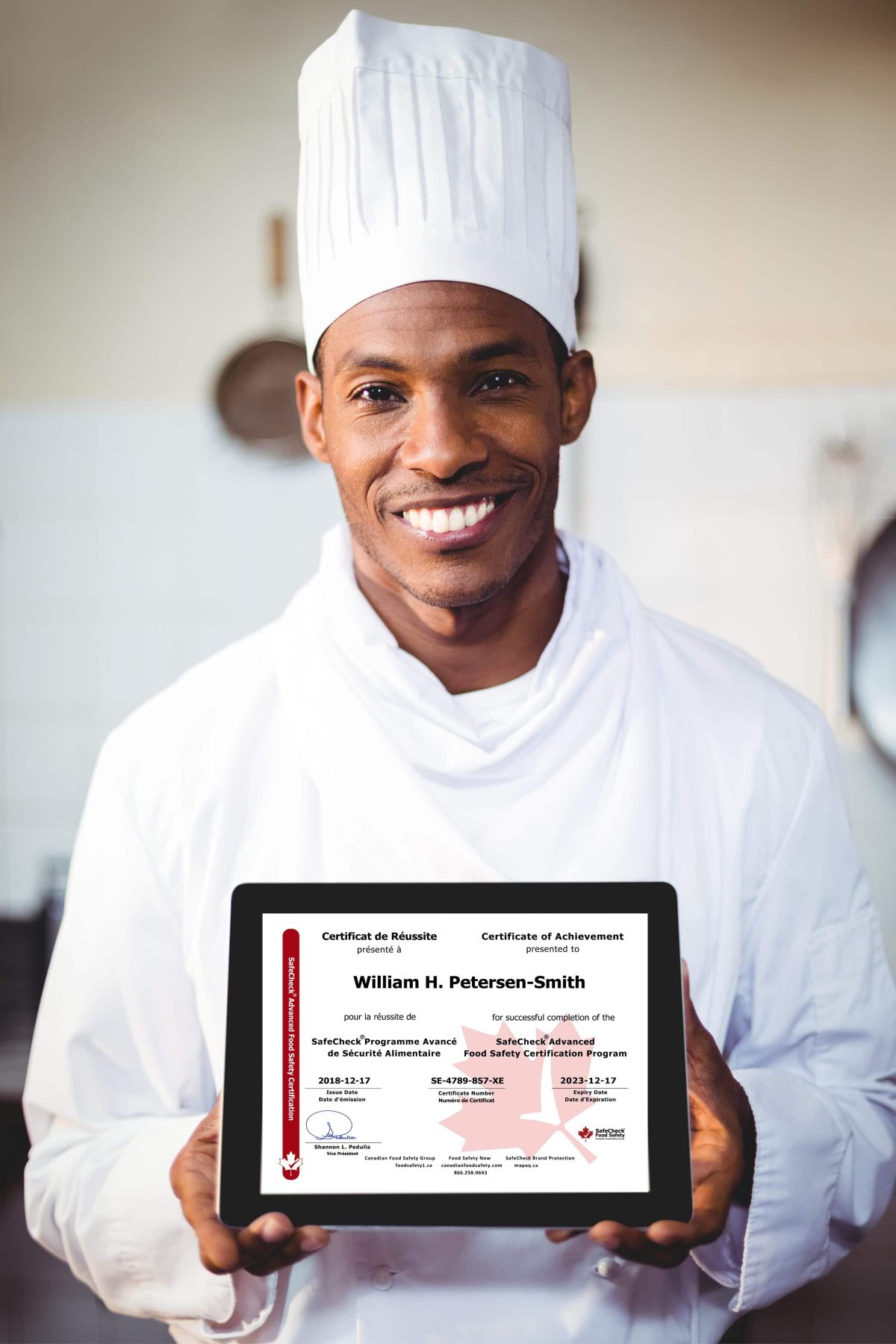
Selecting High Quality, Best Value Food Handler Training in Canada
Chef Holding SafeCheck Certificate There are many online food handler courses available in Canada, and it’s important to find one...
Read More