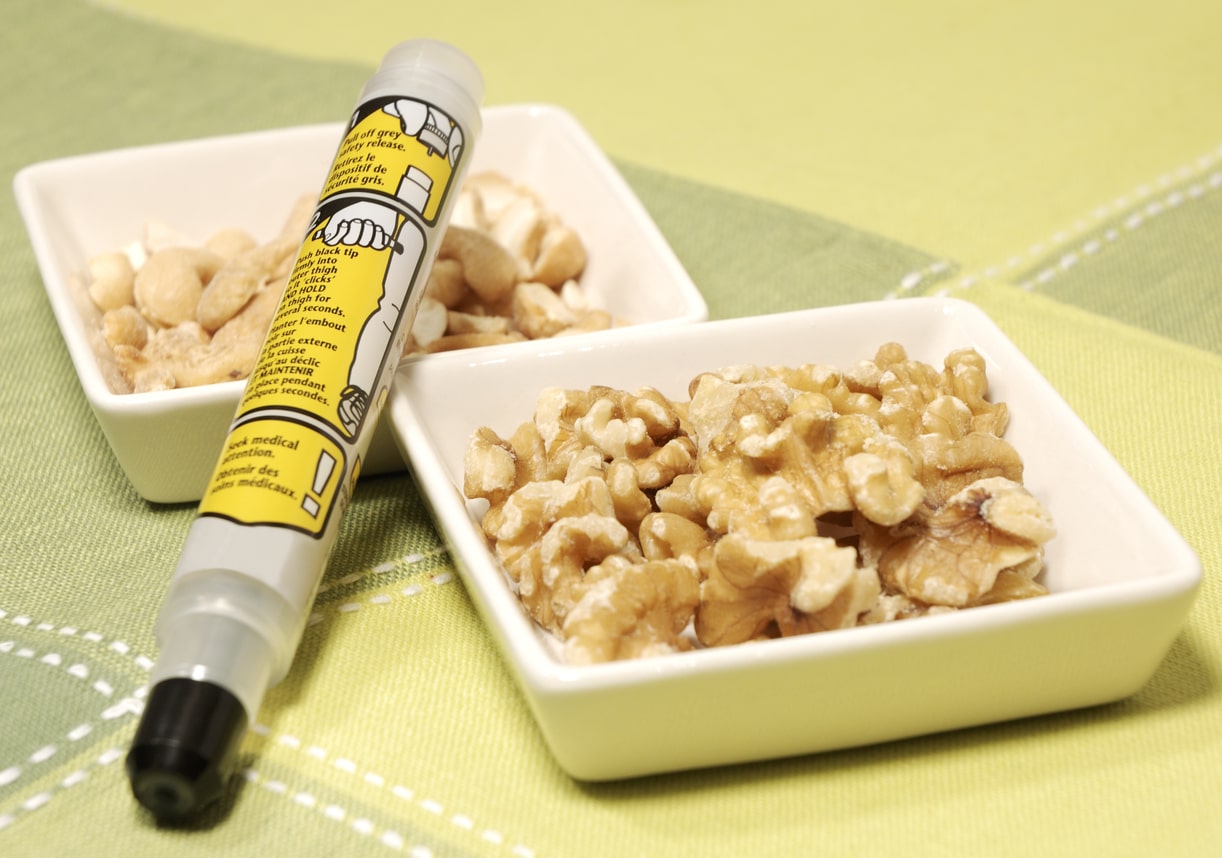
Close up on epinephrine injector with two plate of nuts and cashews
Food allergies are becoming a serious problem for food businesses across Canada. According to recent statistics, over 2.6 million people in Canada struggle with food allergies.
Another study revealed that at least 4 percent of adults and 6 percent of children have allergic reactions to different food items. These reactions range from mild rashes and hives to more serious health problems like anaphylaxis.
While some allergic reactions to food items can be eased with over-the-counter medication, some reactions can still be life-threatening in some situations. This is why restaurants, catering, food retail, and other food and beverage companies must take food allergies seriously. As a worker in the food industry, your staff must be aware of allergies like anaphylaxis to play a productive part in ensuring food safety.
This is why restaurants, catering, food retail, and other food and beverage companies must take food allergies seriously.
Effective food allergen management is crucial for keeping your food business free of allergy incidents that put customers’ health and your business’s reputation at stake.
Ask Your Supplier for Their Food Allergen Protocols
If you utilize a food supplier’s services, make sure you know what’s going into their food products before purchasing them. You should be aware of how your supplier regulates allergen levels in their food items..
Ask your supplier about the techniques they use for measuring allergen status before declaring they are free of potential allergens. You can also request that they show you compliance certification to prove that they are following strict food allergen protocols.
Educate Your Chefs on Prepare Allergen-Free Food Items
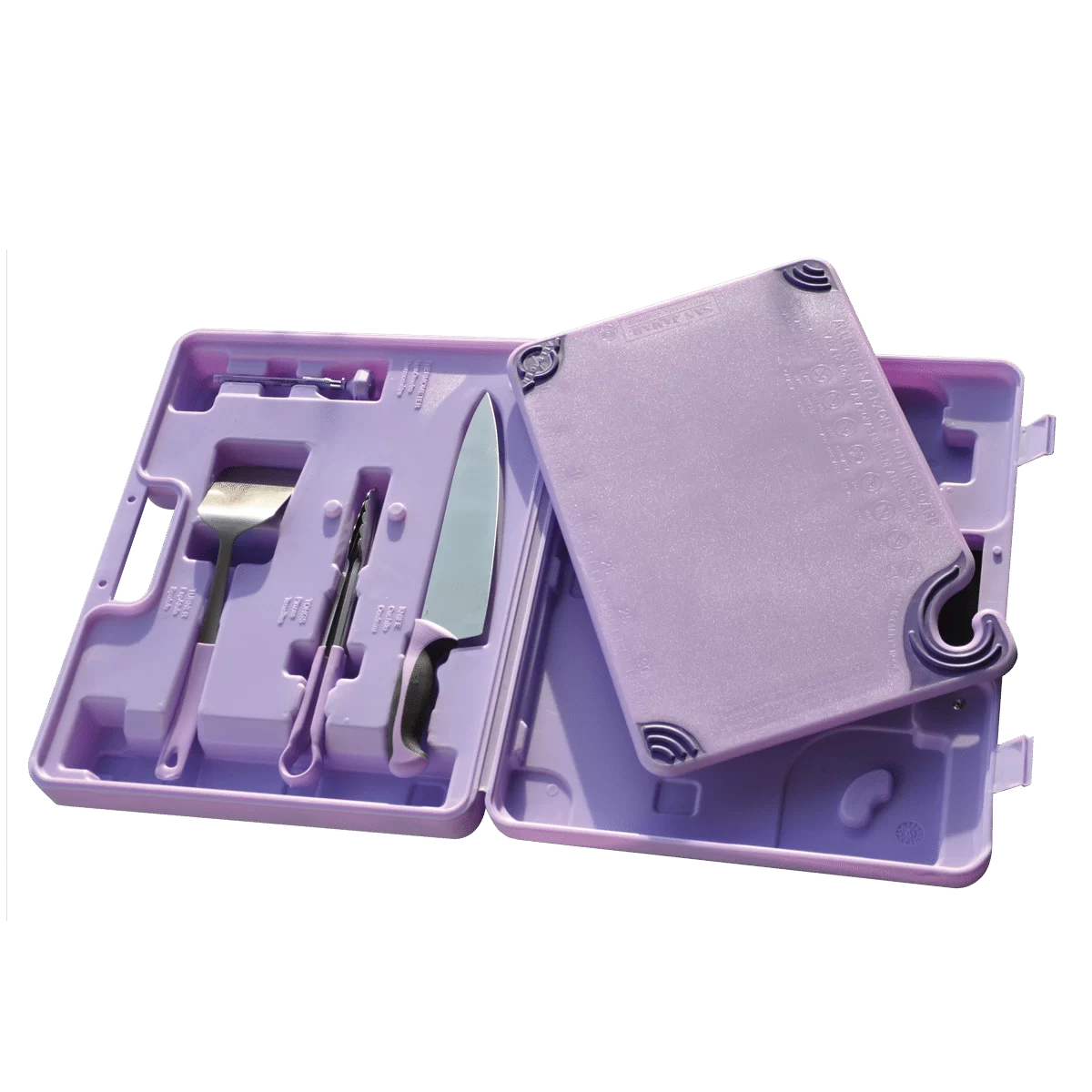
Color Coded Allergen Saf-T-Zone Tools From SanJamar
Restaurants must utilize separate cooking utensils to prepare allergen-free dished. Cooking stations and utensils must be cleaned and sanitized regularly to mitigate the risk of allergic reactions.
For example, if a customer requests you to prepare their food using soy milk instead of regular milk, using unwashed utensils can possibly result in an allergic reaction. Therefore, generating awareness and training your staff about food allergies and their prevention is extremely essential.
Proper Handling and Storage of Food Allergens
Storing non-allergen food items with those that cause allergic reactions can lead to cross-contamination. This is why food businesses must ensure proper handling and storage of regular food items and those that contain allergens. Using color-coded storage containers is a great way to minimize the risk of cross-contamination.
Get Your Food Allergen Awareness Certificate Today!
If you own a restaurant, catering, or retail food business, you and your employees must be aware of all foods that contain priority allergens as well as all the ingredients in each menu item. The best way to educate yourself and your staff is to sign up for the Safecheck® Food Allergen Awareness Online Course for Restaurants, Catering & Retail, including certifications and free unlimited exam attempts.
We also offer a comprehensive and affordable food safety certification course in Canada in multiple languages, including English, French, Spanish, Arabic, Punjabi, and Hindi. The 6-hour long course is equivalent to all Provincial Food Handlers Certification courses and includes COVID-19 awareness and free unlimited exam retakes.
Reach out to us today for more information or browse through our shop to find the right course for you and your staff!
Discover More Safety Blogs
How to Choose a Food Handler Course: 9 Must-Have Criteria
If you work in food service in Canada, you will be asked for your food handler certificate. Finding a course...
Read More
Cleaning Checklist for Restaurants to Ensure Food Safety
Restaurants and other food businesses need to prioritize food safety to ensure that their customers are satisfied, kept safe and...
Read More
Selecting High Quality, Best Value Food Handler Training in Canada
Chef Holding SafeCheck Certificate There are many online food handler courses available in Canada, and it’s important to find one...
Read More
CONTACT US
SafeCheck Learning & Canadian Food Safety